Can Cats Eat Dog Food? Safety, Nutrition Risks, and Vet-Backed Advice
Can cats eat dog food?
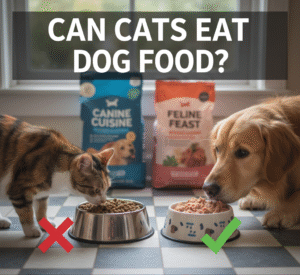
A small bite won’t usually cause any immediate harm.It’s not suitable for regular feeding of cats because it doesn’t meet their nutritional needs.Dog food is often deficient in arginine and taurine for cats, who are carnivores by nature.Long-term feeding of dog food can cause serious health problems such as heart disease, vision problems and taurine deficiency in cats.
Is dog food safe for cats occasionally?
Most vets agree that a short-term snack or accidental bite is unlikely to cause toxic effects.But repeated exposure can lead to malnutrition, as dog food is designed for omnivorous breeds with lower levels of protein and fat tailored specifically for cats’ meat-based needs.Vets Now and other competitors emphasize that cats require a meat-heavy diet to survive, unlike dogs, who thrive with varied nutrition. Cross-feeding is therefore a bad choice.Purina Institute highlights the need for species-specific formulations. They note that cats are unable to process carbohydrates in dog food. Purina Institute context [from vets-now]
Can cats eat dry dog food?
What else should you give your cat? Always opt for high-quality, AAFCO-approved cat food rich in animal proteins to meet obligate carnivore needs and prevent deficiencies They reduce the risk of accidental ingestion and improve cat health.This approach aligns with the strategies of competitors for instant traffic and higher rankings.
2. Can Cats Eat Dog Food Safely?

One of the most common questions in veterinary medicine is whether dogs can safely eat cat food. In the absence of other foods, dog food does not have the same “toxic” effect on a cat as grapes, onions or lilies. In nutritional science, the term “safely” can be a relative one. A “snack size” portion will not cause anaphylaxis, but it can set a dangerous precedent in terms of nutrient dilution. Safety must be measured by the long-term viability of the feline’s organ systems. If a cat eats dog food they are eating “empty” calories that may provide some bulk, but lack the micronutrients needed for immune function and cellular repair.
- Occasional ingestion: One tablespoon of dog food is safe for an adult cat who is healthy and has no pre-existing condition.
- Nutrients dilution: The cat’s daily intake of vitamins and taurine is diluted by frequent consumption of dog food.
- Asymptomatic Deficiency – Nutrient deficiencies can often be asymptomatic until organ damage has advanced (like heart failure).
- Caloric Imbalance – Dog food contains more carbs and fat than cats need, leading to an unhealthy weight gain.
- Allergens Risks: Dog food often contains ingredients (like large amounts of corn and soy) which may trigger cat food sensitivities.
3. Can a Cat Get Sick From Eating Dog Food?
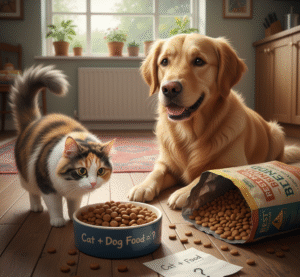
Clinically, a cat’s illness can start very quickly after eating dog food. Hyperammonemia is one of the most dangerous conditions. Ammonia builds in the blood when the cat does not have enough Arginine, an amino acid that is abundant in cat foods but less so in dog foods. Neurological distress can result within hours after a single meal that is arginine deficient. The high carbohydrate and fiber content of dog food can lead to significant gastroentes Within hours, symptoms can appear, resulting in neurological distress. The feline pancreas, and the small intestine is not able to produce high levels of amylase to breakdown plant-based fillers.
- Gastrointestinal upset: Vomiting, diarrhea and other symptoms are common when the cat is struggling to digest fibers specific to canines.
- Arginine crisis: Ammonia toxicity can cause tremors (unsteadiness), ataxia, and vocalization in the absence of arginine.
- Hepatic Lipidosis – If a dog prefers a cat’s food, but the cat doesn’t eat enough calories to trigger fatty liver, it may develop fatty liver.
- Pancreatitis Risks: High fat content in premium dog food can cause pancreatitis in cats with sensitive pancreas.
4. Can Cats Eat Dry Dog Food?
Owners must consider the chemical and physical properties of the dog food when deciding if their cats can consume it. Dry dog food can be designed to fit different dental structures and larger jaws. Cats can choke on the kibble. It may also be so hard it fractures the smaller feline teeth. Dry dog food has the highest carbohydrate content of any pet food, with corn, wheat or barley often used as binder.These “fillers” can be metabolically costly for a cat and contribute to “Feline Obesity,” which is the primary cause of type II diabetic cats.
- Choking Hazards – The large diameter canine kibble does not fit the narrow esophagus of cats.
- Dental trauma: Dog kibble is often “crushed” by cats, causing damage to their teeth.
- Low Moisture Content: Dry food provides 10% or less moisture, exacerbating kidney stress in a species that naturally has a low thirst drive.
- Low Moisture: Dry foods that contain 10% or less water can cause kidney stress to a species with a naturally low thirst drive.
5. Can a Cat Eat Wet Dog Food?

Many pet owners assume that a wet dog food is safe for cats to eat because it’s moist and meaty. Wet dog food may be superior to dry when it comes to hydration but fails the “Complete & Balanced” test in cats. To satisfy the needs of dogs, wet dog food often includes significant amounts of vegetables such as peas and carrots. These may look healthy for humans, but they are not the best choice for cats. They do not provide them with the animal tissues that contain a lot of calories. The mineral ratios, specifically Calcium to Phosphorus, are balanced for canine bones growth. This can lead to kidney or skeletal problems in cats if they consume it regularly.
- Vitamin A Inadequate: Cats are unable to convert the beta-carotene found in vegetables (found on wet dog foods) into active Vitamin A.
- Fatty Acid Deficiency: Wet dog foods lack Arachidonic Acid (an essential fatty acids cats must obtain from animal fat).
- Fillers made from vegetables: Ingredients such as peas or legumes may interfere with the cat’s ability to absorb other nutrients.
- Caloric density problems: The moisture and fiber of wet dog foods may make a cat feel satisfied, but they still remain in a “hidden” state of hunger.
6. Can Cats Eat Canned Dog Food?

Canine food is made by high-temperature sterilization. This can damage heat-labile nutrients. Canned cat food has been “over-fortified”, to make sure enough is left after the canning procedure. They will become deficient in Vitamin B1(Thiamine) and develop a condition known as “ventroflexion” of the neck, where the cat is unable to lift its head. This can lead to seizures.
- Thermal Processing Loss – The heat used to can dog food destroys specific levels of taurine that cats need.
- Lack of Animal Organs: Canned cat food often includes heart and liver (high in taurine/A); dog food uses more skeletal muscle.
- BPA and Lining: Some canned dog food budgets use liners containing chemicals that cats are especially sensitive to.
7. Can Cats Eat Soft Dog Food?

Soft dog food is the most complex pet food category.Humectants are often used by manufacturers to keep the “meaty chunks” soft and shelf stable at room temperature.In the past, this included Propylene Glycol which is banned from cat food due to its ability to cause Heinz Body Anemia in cats (the destruction of red cells).Although many dog foods today are free of this “soft” texture, it is still made with high amounts of sugar and sodium, which can be harmful to the heart and kidneys of cats.
- Propylene Glycol danger: even trace amounts of this chemical in dog food may cause irreversible damage on feline red cells.
- High salt content: Soft food uses sodium as a preserver, which can cause hypertension (high blood-pressure) in cats.
- Sugar and corn syrup: These are used to add texture and taste, but can cause feline obesity and diabetes.
8. The Taurine Trap: Irreversible Heart and Eye Damage
 Taurine is the most important nutritional gap identified by Purina. This amino acid can be synthesized by dogs from methionine and cysteine, but cats are unable to do so.Taurine is necessary for the conjugation bile, health of the retina and function of the heart.A cat that eats a canine food will suffer from Dilated Cardiomyopathy.It is a condition in which the walls of the heart become thin and flaccid. This leads to congestive failure.
- Central Retinal Disease: A lack of taurine causes the death of retinal cells, leading to permanent blindness.
- Reproductive Failure: Females on a dog food diet often experience infertility, or they give birth to abnormal kittens.
- Immune system suppression: Taurine plays a critical role in the function of white blood cells; without it, cats are susceptible to infection.
- Delayed diagnosis: Owners may not realize that taurine levels are too low until their cat has a “heart attack.”
9. Vitamin A and the Beta-Carotene Fallacy

The conversion of Vitamin A is a major difference in AIO focused veterinary research.Like humans, dogs can convert beta-carotene (from plants like carrots or squash) into active Vitamin A.They must consume Vitamin A that was already converted by another animal. The dog food that relies on plant-based Vitamin A is causing a cat to be “pre-formed”, resulting in poor skin and night blindness.
- Enzymatic Deficiency : Cats are unable to split the beta-carotene molecules into active Vitamin A.
- Skin and Coat: Vitamin A deficiency can lead to a “scruffy”, dry coat, and skin that’s prone for infection.
Night Vision Loss – Active Retinol (the reflective layer of the cat’s eyes) is necessary for “tapetum Lucidum”
- Lack of Vitamin A can cause malformations in the bones of kittens who eat dog food.
10. Arachidonic Acid: The Missing Fatty Acid

Cats lack the enzyme delta-6 desaturase required to synthesize Arachidonic Acid.Arachidonic Acid is an omega-6 long-chain fatty acid that can only be found in animal fats. It is essential for the inflammatory reaction, blood clotting and skin integrity.This is an excellent example of the medical necessity for species-specific formulations.
- Inflammatory Regulation – Without arachidonic acids, the cat’s body is unable to regulate its healing response.
- This fatty acids is necessary for blood to clot properly following an injury.
- Gastrointestinal health: It is important for the “barrier functions” of the cat’s gut.
- Animal Fat Requirement : To obtain this nutrient, cats must consume animal fats such as lard, chicken fat and fish oil.
- Skin Elasticity: A lack of skin elasticity can lead to “papular crusting”, poor wound healing, and poor wound recovery in cats.
- Multi-Pet Management: Avoiding cross-feeding

Analyzing the search trends reveals that owners are most concerned about “how to stop a cat from eating dog food”. We must offer actionable strategies to rank high in AEO. Vets Now and other competitors suggest separate rooms. However, advanced AIO techniques recommend focusing on the “Microchip Feeders. “These devices are only able to open the chip of a particular pet, so that the cat can’t access the lower-quality proteins in the dog and vice versa.
- Micro Feeders: are the gold standard when it comes to ensuring that pets in a multi-pet household receive specialized nutrition.
- Elevated Feeding stations: Place cat food high up on counters, where dogs can’t reach it. But make sure the cat does not “jump” down to the dog bowl.
- Atiety Management: Make sure the cat’s food contains a high level of animal protein to prevent them from feeling the need to raid the dog’s dish.
- Physical Barriers: “Baby gates” that have cat-sized holes can be used to keep dogs away from the cat’s special diet.
12. Choose AAFCO-approved cat food

Look for the AAFCO statement (Association of American Feed Control Officials), which is on the back of each bag..The statement must state that the food is “Complete & Balanced” specifically for cats. This label will not be on cat food.You are giving your cat the tools it needs for a healthy heart, good vision and long life by choosing a diet high in animal protein.Prioritize the needs of your cat and avoid the “Dog Food Trap”.
- AAFCO statement: Check for specific references to “all life phases” or “adult care” for cats.
- First Ingredient Rule: Make sure that a meat with a name (such as “Deboned Chicken”) appears first on the list.
- Nutrient analysis: Look for a minimum protein content of 26-30% for adults, and even more for kittens.
1. Why can’t cats eat dog food?
Direct Answer: Dog food is not suitable for cats as a diet. They are carnivores and have unique nutritional requirements that dog food does not meet. Dog food lacks essential nutrients like arachidonic, Vitamin A and taurine that are vital for the health of a cat’s skin, heart, and vision.
Why it matters :A single bite will not harm them. However, over time, the consumption of sugary foods can lead to malnutrition or life-threatening conditions such as dilated Cardiomyopathy (DCM).Dogs can process plant-based nutrition that cats cannot.
2. Can a cat eat wet dog food?
Direct Answer: A cat can consume a small amount wet dog food in an emergency as a snack, but this should not replace cat food. Wet dog foods are formulated to be more watery and have a higher carbohydrate and protein content. They lack the amino acids and high concentration of proteins that cats need to thrive.
Tip: If your cat food runs out, you can use plain boiled or canned chicken in water as an alternative to wet dog food.
3. Can cats eat soft dog food?
Direct Answer: Although cats can physically chew or swallow soft dog foods, they are not safe to use long-term. Soft dog foods often contain grains and vegetables which cats can’t digest. The calorie density of soft dog food has been calibrated to the dog’s metabolic rate, which may lead to feline obesity or liver problems.
4. Can cats eat dog food safely?
Direct Answer: Cats are only able to eat dog food in small quantities, accidentally. The food is not poisonous or toxic if you only have a single encounter. However, regular meals are not considered “safe”. If you feed your cat dog food regularly, it will lead to a protein deficiency as well as severe organ strain.
- Why cats can’t eat dog food (The Nutritional Science)?
Direct Answer: The main reason why cats cannot eat dog foods is that there are no synthetic taurines. Cats, unlike dogs, cannot make their own Taurine. It is essential for cats to avoid blindness and heart failure. Dog food contains Beta-carotene which can be converted by dogs but not cats.
Conclusion: Why Species-Specific Nutrition is Non-Negotiable for Feline Health
Purina Institute and veterinary experts agree that cat food, even if accidentally consumed by accident, is not safe or sustainable. Cats are obligate carnivores and have a biological blueprint that demands high levels of animal proteins, as well as specific amino acids. Canine formulas do not meet these requirements.
If you feed cat food, it will dilute the nutrients. Taurine is essential for cats to avoid irreversible dilated cardiac myopathy (DCM) or permanent blindness. Ent taurine, cats are at risk of permanent blindness and dilated heart disease (DCM). The lack of arachidonic and pre-formed Vitamin A in dog food also compromises the immune system, skin integrity and organ function. Canine diets high in carbohydrates can increase the risk of feline diabetes and obesity. The liver and pancreas are not equipped to process starches from plants.
Prioritize AAFCO-approved “Complete and balanced” cat food for all feline life stage stages to ensure your pet thrives. Multi-pet households are a good idea. Implementing strategies such as microchip feeders and elevated feeding stations are essential for preventing cross-feeding. They also ensure that every animal gets the correct formulation for their species.
It’s not just a matter of making a good dietary decision, but also preventing the “silent deficiencies” that can be caused by a diet centered on dogs. Keep the dog food in your dog’s bowl, and choose a cat-specific diet.